Tuesday, October 31, 2006

The Garden of Eatin’

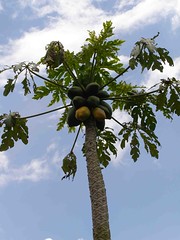
After Sister Freda gave us a tour of her rural clinic, she led us past her own small house (one of the few I’d seen with running water and a western-style toilet) to one of most enchanting parts of her property: the tropical fruit grove.

Pushing past the low-slung gate, we entered a lush, emerald green playground where the plants were so tall and widely spaced, that as we walked single file between them, I felt as though we’d stepped into a scene from Honey I Shrunk the Kids.

“Oh good. I think that the pineapples are nearly ripe,” said Sister Freda

Instinctively, I glanced up, trying to spot them hanging from the trees, but I quickly realized that I was walking right past them. The spiky little fruits were peeking their heads out from the center of a waxy green plant no taller than my waist.

As we examined them more closely, Sister Freda went on ahead, pulling several junior-sized pineapples directly off the plants and tossed them back to us.

“Um, guys, do you think that this one is bad?” Holly held out her pineapple to us and we all peered at it. On one side, the fruit had caved in and tiny black bugs were crawling out of a hole in the tough skin.

“Yeah, I’d say so,” said Irene. “Here, take one of mine.”
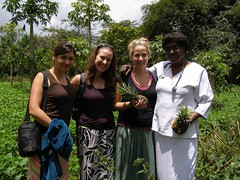
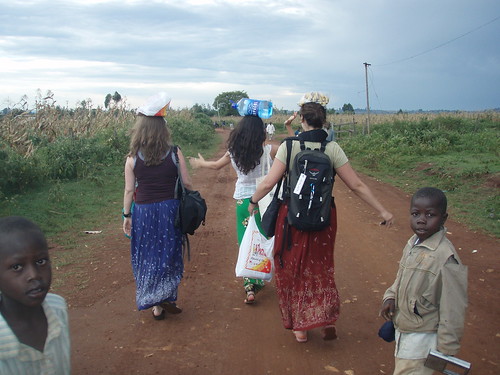
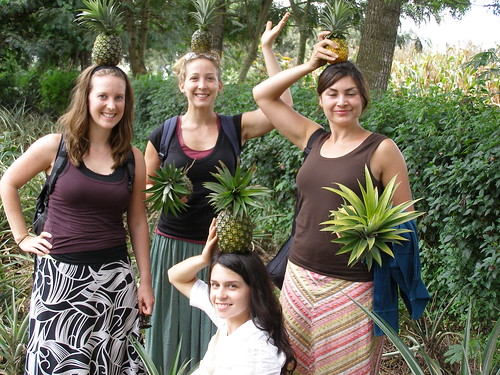
Once Holly had chucked the rotten fruit, we took pictures with the good ones balanced on our heads (you know, like Chiquita girls) and ran to catch up as Sister Freda. She’d already reached the section of the garden where the guavas were so ripe and heavy, they came off the trees with the slightest turn of her wrist.

Elijah, the local guide who had joined us in the garden, demonstrated that we could bite right into the soft skin of the guava and peel the outer layer to get to the soft pink flesh inside. We all did followed suit, then took a bite.

“Eww! Gross! Oh my god, you guys!” Holly screeched between spitting pieces of her guava onto the ground. “There are worms in my fruit.”

“Are you sure?” Jen said, a trace of doubt tingeing her voice. Holly had a habit of spotting the most disgusting things in almost everything she ate. We could always count on Hol to pull a short curly hair from between the layers of her sandwich or spot a small bug floating in her soup. It had gotten to the point where Holly had claimed so many nasty additions, that we wondered if she was imagining them.

Continuing to gag profusely, Holly didn’t have to say anything to answer the question. Her current predicament reminded me of one of the very first jokes I’d learned as a kid

What’s worse than biting into an apple and finding a worm?

Finding half a worm, of course.

“Ew, Holly’s got worms up her guava!” shouted Jen.

We all erupted into laughter, and between grimaces, even Holly had to even smile.

Downpour
We collected huge armfuls of mangoes, avocados, guava and pineapples, hugged Sister Freda goodbye and started heading back towards the main road half a mile away. We hadn’t gotten very far when the enormous storm clouds that had been threatening all afternoon finally opened up and dumped their contents all over us. This happened almost every single afternoon between 2 and 4 pm, but the rains had still caught us by surprise.

“Please, we must go fastah now,” urged Elijah, trying to make us hotfoot it down to the matatu stop.

“Elijah, you’ve got four women loaded down with multiple pounds of fruit,” shouted Irene, “There’s no way you’re going to make us move us any faster.”

He must have heard the truth in her tone, because he motioned for us to head off the dirt road, which by now was rapidly turning into a raging river of mud. We followed him to a low-slung house constructed from the same cow dung bricks we’d seen all across western Kenya. Clearing a particularly huge puddle, we landed in front of a shadowy doorway and tiptoed around six small children to get inside.

“Wait. Elijah? Do you know the people that live here?” Jen asked

He didn’t answer. Elijah said something to the kids in Swahili and they scattered to the back of the house.

Unsure if whether we were trespassing or not, we tentatively down on a set of mismatched couches and waited. I stared at the various yearlong calendars affixed to the walls with long nails, freebees from fertilizer and tractor and sugar companies. There was one from 2001, a 2003 and a 2004. The current year, and one before it were conspicuously absent.

A few minutes later a tired looking woman strolled into the living room, offered us each a limp handshake and said something to Elijah before departing once again. Her blank expression told us that she wasn’t surprised to see us perched uncomfortably on her furniture. Before we could confirm anything with our guide, the sound of the rain striking tin roof grew to a jackhammer decibel, ruling out the possibility of casual conversation.

Across the room, two small kids sat side-by-side on a stuffed chair draped in what looked like an oversized lace doily, staring at us with trepidation. Behind them, a tiny girl with cornrows peaked out, squealing and crying in horror as she caught a full glimpse of the sopping wet white aliens who had invaded her living room.

The four of us stared back. After a few minutes, Holly broke the silence.

“Hey there, guys” she coaxed, holding out a piece of fruit she’d plucked from her backpack. “What’s this, huh? It’s a pineapple. Want to see it?”

Her simple peace offering got the best of their curiosity. The two older kids crept over grabbed it from Holly’s outstretched hand and hauled back across the room to examine the gift. Giggling, they returned once again, now content to climb all over the couch behind Holly, Jen and Irene. I watched the scene from across the room, my eyes growing heavy from the humid pressure in the hut and steady rhythm of the thunderstorm outside.

I hadn’t realized that I’d nodded off until a buzzing fly alighted on my shoulder and zapped me awake. The rain had slowed to a light patter, and Elijah had decided that it would never stop completely. Time to go.
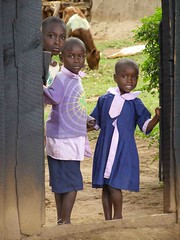
We decided to give the mother a few additional pieces of fruit to thank her for letting us invade her home. As we passed though the doorway to go, the older daughter surprised us with her farewell.

“We shall meet again,” she said, solemnly.

“Wow, did she just say ‘shall’?” asked Holly. It wasn’t the first time we’d heard such starchy formality coming from such a little mouth. Even the kids that we taught at Pathfinder usually preferred contractions like “shan’t” to “won’t” and threw out phrases such as “we must persevere,” and “enter the circle…you will not fail” during recess games like dodgeball and soccer.

As we returned to the dirt road, now sloppy and mucky enough to consume our sandals and dye our feet paprika red, it occurred to me why the little kid language pushed past the boundaries of old-fashioned and into archaic territory.

“I think that that only book these kids get to read is the bible.” I said.

“Yeah, you’re totally right,” Irene agreed for the group. “It’s sermon talk.”

We all fell into a heavy silence, trudging through the misty grey afternoon, thinking about all of the Little Golden Books, Frog & Toad stories, Goosebumps paperbacks and Harry Potter titles that the vast majority of these kids would never get to experience. They’d probably never read Where the Red Fern Grows, The Cat in the Hat or Where the Wild Things Are, or see themselves in a character created by Judy Bloom or Beverly Cleary.

Of course, those titles probably wouldn’t strike the same chord for a kids growing up in rural western Kenya as did were for me, an awkward little girl raised in the Florida suburbs during the ‘80s. Still, reading had blown my mind as a child, stoked my already wild imagination and allowed me to travel to places populated by fairies, monsters and good witches—but not a single grown up. I wished that these local kids—many of whom reported “sweeping” and “washing utensils” as their favorite after-school activities—could experience the great escape that had been so vital to my own childhood.

Later that night, when I got back to the school and looked through my stuff, I came across Harry Potter and the Sorcerer’s Stone, something I’d packed and forgotten about completely. I never read the books and had skipped the movies, finding it pointless to watch them out of order. I’d bought this book (the first in the series) in Nairobi, intending to get caught up on my pop culture reading during my long nights on the road.

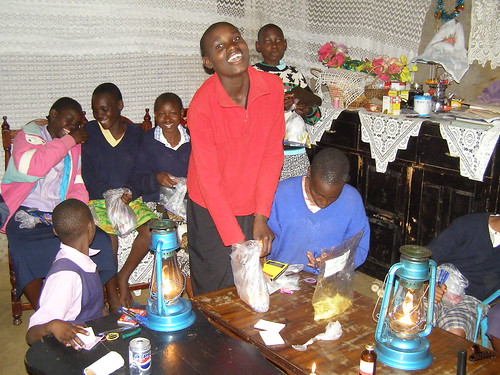
Grabbing the paperback and switching on my headlamp, I hiked down the dark path to visit the 12 pre-teen girls who boarded at Pathfinder Academy. I learned that while most had heard of the boy wizard Harry Potter, not a single one of them had read the books.

“Do you want for me to read it to you?” I asked.

“Yes! Yes!! Harree Pottah! ” they screamed in a chorus, grabbing my hand and pulling me over to sit on one of the twin beds. As I flipped open to the first page, they settled in all around me, resting chins on my shoulder and curling up around my lap.

The electricity had gone out earlier, plunging the entire dorm (and indeed, the whole camp) into darkness. The glow from my headlamp and the girls’ kerosene lanterns gave their room a mystical atmosphere befitting the other-world we were about to step into. As thrilled and wide-eyed with anticipation as the little girls snuggled all around me, I started to read.

Sunday, October 22, 2006

Silly Mzungus

When you’re an obvious stranger in a strange land, or in our case, a bustling pastoral community in Western Kenya, it’s bound to attract some attention – particularly if you’re of the paler skinned variety as we are. Every time we venture outside the borders of our volunteer farm compound to head into the ‘booming metropolis’ of Kiminini, we’re innocently reminded what very different and genuinely intriguing creatures we are.

Before barely stepping a baby toe onto the mud caked roads, we’re barraged with shouts of “Mzungu, mzungu!” (which means white person in a non-derogatory way)” and “How are you?” (the onlookers whose English is limited to this one phrase are especially enthusiastic to repeat it over and over again), to which we gladly respond with a confident “Mzuri sana” (very well) in our best Swahili accents. As if we weren’t funny enough already, speaking a few native phrases can erupt groups of local kids into fits of giggles and high pitched squeals. Who knew our pastiness could bring such pleasure to the masses? I think Amanda summed it up best when she stated “Well, I guess if I saw a purple person walking down the street, I’d laugh too.” True dat, Pressner!

So we’ve happily embraced our role as the resident entertainers, stopping often to play with our favorite neighborhood cherubs as they follow us down the bumpy dirt streets towards town. Amanda, Holly and I are so amusing that we’re even able to evoke an occasional fit of laughter or raise an inquisitive eyebrow among the 14 female boarders, staff and host family at the farm/school where we’re staying – and they’ve spent plenty of time with overseas visitors like us. Go figure! While we may not be saving the world, we do feel good about supporting this local Kenyan community through our volunteer efforts and, of course, keeping everyone smiling while we’re at it.

Here are just a few of the ‘zany’ habits, ‘crazy’ rituals and ‘wacky’ behavior that often label us as totally hilarious and very silly muzungus:


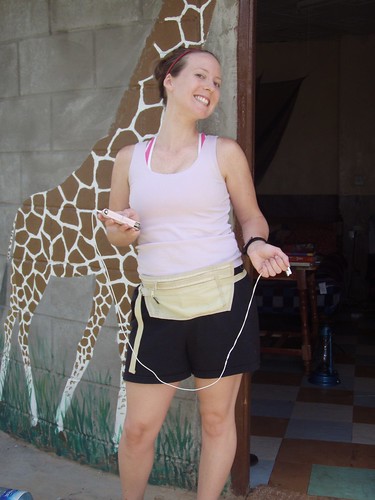
1. We Run Nowhere: During our down time from volunteering, the girls and I prefer to explore our picturesque surroundings by taking a jog around town (yes, parental units, it is safe). It’s hard not to be inspired when you’re running under a vast aquamarine sky and past sunflower-sprinkled fields, but what really keeps us motivated are the adorable little munchkins who always stop what they’re doing to race along beside us.

And while sometimes they don’t seem to really get what we’re doing or where we’re going, they’re always enthusiast to join, albeit chuckling the entire time. Not only are we helping the neighborhood kids get some exercise, we’re also dispelling some pretty comical myths. Case in point, one girl said that until she saw us, she didn’t think white people could run. When we asked her why, she stated rather matter-of-factly that it just made sense that Americans couldn’t run or otherwise they wouldn’t be so fat. Hmm, she had a point. We’re just so thrilled that our exercise regime not only keeps our love handles at bay but also helps contribute to our nation’s fight against the flab.


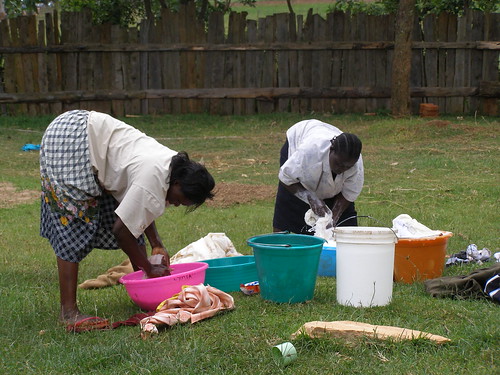
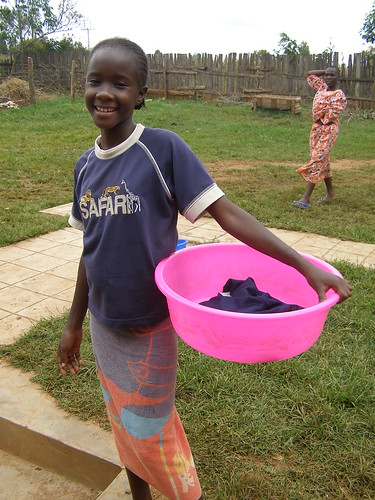
2. Our Laundry Skills Are Laughable: As girls who rarely even throw our own clothes into the machine at home (NYC has uber cheap wash and fold service), hand washing our entire wardrobe in front of women who have made scrubbing an art form, tends to stir up a whole lotta laughs. Our volunteer coordinator’s wife, Mama Sandra (women here are often referred to by their first born’s name preceded by Mama), doubled over in hysterics as I gently swished my t-shirts and shorts through one bucket of soapy water then tried to rinse them in a second bucket. “Jennifer, let me do that for you,” she exclaimed, grabbing the remaining dirty garments from my hands.

Thoroughly amused by my wimpy scrubbing technique and pitiful number of buckets (apparently anything less than four is unacceptable), she insisted on taking over. Try as I may to convince her that I really could clean my own clothes, she wouldn’t take no for an answer. After making the argument that my experience in Kenya would be better if I learned to do laundry like a local, she finally gave in and allowed me do half the load myself. Maybe I was just delirious after squatting in the hot sun for so long, but after washing side by side with Mama Sandra for the next hour, I swore I saw nods of approval from passersby. Whoo hoo! If my skills were up to par by Kenyan standards, any other housework I tried from here on out would be a drop in the bucket (oops, I mean many buckets).


3. Bugs Scare Us: While the girls and I have each contended with our fair share of creepy crawlers on the road, our initial reaction tends to stay the same: Step 1: Scream; Step 2: Run in the opposite direction; Step 3: Argue about whose turn it to Doom the creature to death (Doom is a popular brand of hard core bug spray used here). However, after noting the reactions of our Kenyan friends (or rather lack thereof) to our little bug-induced breakdowns, we’ve begun to feel slightly foolish. Every time we bolt for the door in a horrified panic over an approaching roach or spider, our hosts remain calmly rooted in place, their mouths agape and brows furrowed in confusion.
So one day we flat out asked a few of the young boarders what they do if they see an insect in their room. “We do not fear them,” they replied as if quoting a bible passage about battling Satan’s evil spawns. Maybe it was their serene demeanor or the fact that we’ve just gotten used to co-mingling with nature, but over time we’ve successfully revised our initial 3 step program to the following: Step 1: Loudly announce the presence of a scary creature; Step 2: Walk briskly out of the room; Step 3: Use 2x the amount of Doom and pat ourselves on the back for being so brave.


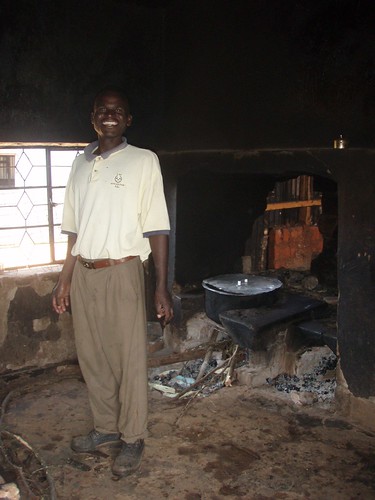
4. We Mash Our Avocados: After spending a few days at Pathfinder (the name of the school/farm where we’re volunteering), we started to notice that the staff would often go M.I.A. for hours on end and seen only entering and exiting small, dimly lit huts at the end of the property. We soon realized that the dark, smoky rooms were actually the food prep area and kitchen where they worked. With only a wood burning fire and huge steel cauldrons of well water to work with, they practically had to spend the entire day cooking in order to get lunch and dinner on the table for everyone.

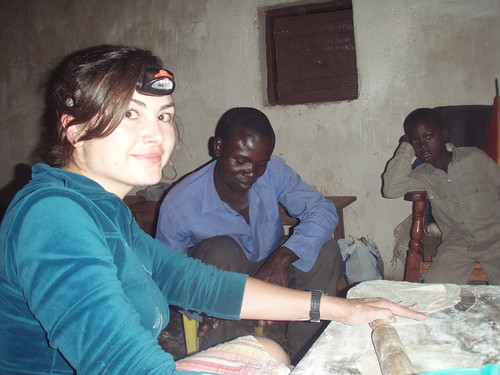
Back in Manhattan, we considered it a crisis if our Chinese delivery order took more than ½ hour, but living here quickly jolted our perspective back to reality. We couldn’t in good conscience continue to have our meals served to us on a silver (tin) platter without pitching in to help. So in addition to rolling chapatti dough or offering to assist any way we could, we insisted that the entire staff take a night off and so that us volunteers could prepare a meal for them. Delighted at the prospect of sampling an authentic western meal, the director (Joshua) agreed to let me, Amanda, Holly and Irene (our fellow volunteer and honorary Lost Girl) plan the complete dinner menu for the upcoming Saturday. With an ocean between us and Taco Bell coupled with our ability to score bundles of avocados at the local market for mere pennies (one in NYC costs $2), our mission was clear - introduce the good people of Pathfinder to the beauty of guacamole!


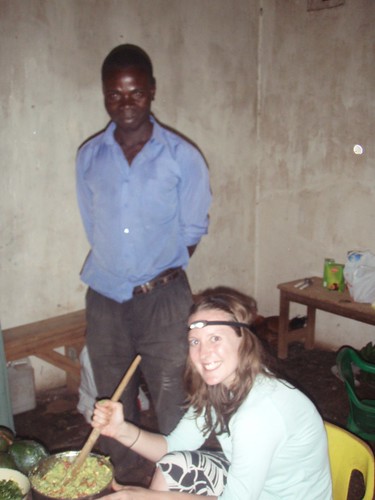
Working with the limited food offered at the grocery store, the girls and I devised our plan: thinner chapattis would double as tortillas, kidney beans and rice would serve as burrito filling, sweet plantains, cinnamon and sugar would make a yummy dessert and tomatoes, onions, avocados, chili sauce and limes could easily be combined to create both salsa and guac. We might as well have been speaking pig Latin by the looks on everyone’s faces as we tried to explain why we were mashing up the avocadoes. Mama Sandra and the cooks giggled nervously as we chopped and blended everything together in the bowl. “Just wait and see,” we said. “You all are going to love guacamole.” The fact that their four guests were cooking in the first place seemed to be funny enough to them, but the introduction of all these strange new dishes was just too hilarious for them to handle.

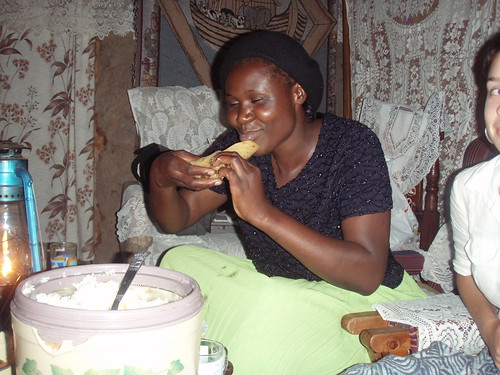
After demonstrating our burrito rolling techniques and explaining that the salsa and guacamole was there for dipping and topping purposes, we had satisfactorily prepared them for their first Tex Mex experience. Luckily, their apprehension turned to exhilaration after just one bite. Mama Sandra practically fell off her chair she was so excited and the cooks’ mouths widened in delight as they helped themselves to a second and third burrito. The girls and I breathed a sigh of relief - - mission accomplished. Not only had we given the hard working staff a much needed break, we forever changed the way they’d look at avocados. What more could a mzungu ask for?


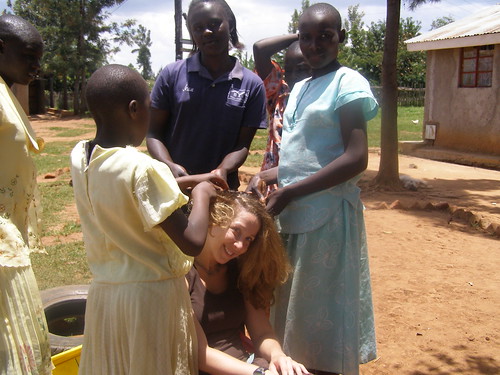
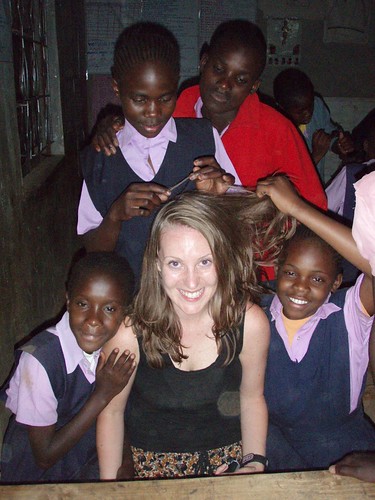
5. We Braid Our Own Hair: The 14 young boarders at the school are not only some of the most amazing girls we’ve ever met (most have lost one or both parents to HIV/AIDs and they still maintain a positive outlook on life), they never cease to put a smile on our faces or remind us how absolutely hilarious they think we are. Whether it’s the way we run awkwardly in long skirts during a ball game, (we’ve always competed in shorts or pants), our uncanny ability to shake our booties like Shakira during daily dance classes or our fabulously stylish headlamps, we never cease to amuse our star pupils. And usually they’re content to simply observe our strange customs and silly behavior without running interference. That is, except when it comes to one very important daily grooming ritual – our hair care. Since it is a cultural norm for them to have their do’s styled by someone else, they refuse to let us fix our own coifs when in their presence. Particularly when we try to braid our own hair, which is just plain ridiculous! They know they can do a much better job and they absolutely do.

Quite often one of the girls hanging out in our hut will grab a handful of strands and go to town, pulling and twisting pieces into small, tight braids. Before we know it, there are three or four different girls working on our heads. And while they sometimes get perplexed over the fact that our hair won’t stay put on its own, they’re more than happy to just put braids in, take them out and put them back in again. Of course, like most women, we love to have our hair played with, so we gladly soak up the attention and kindly offer to lie down on the bed while they work on beautifying us. In return, we let them hide out in our room to watch movies, listen to music on our iPods or play with our computers, all of which are huge treats for them. These small acts of friendship might not sound very earth shattering to an outsider, but the bonds we’ve built over our time here with these amazing girls have meant the world to us. And so it seems from their constant giggles and laughter, it has to them too.


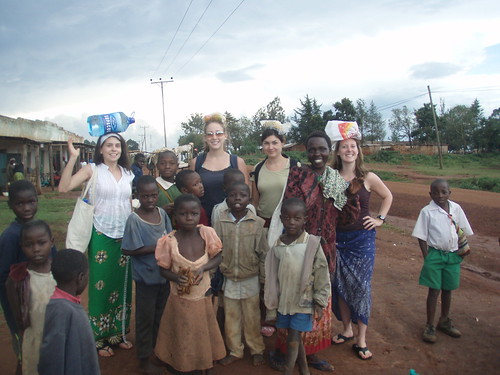
6. We Can Carry Things Are Our Heads Too: After a full day of visiting neighbors, running errands in the closest ‘big’ city, getting drenched by the daily rain storm and squishing onto a rusty matatu with 25 other passengers (the max capacity is 14) to head back to Kiminini, the last thing we wanted to do was cart the hundred pounds of groceries we had just purchased all the way down the muddy roads back to our farm. But with a lack of transportation options and a stubborn impatience to just keep going so we could get home already, we slung the wet plastic shopping bags over our shoulders and trudged ahead down the slippery streets. Maybe it was the sympathetic looks we were getting from the villagers or the realization that we all just needed to laugh or else we’d cry, but all of a sudden Holly, Amanda, Irene and I were hit with a wave of giddiness.

And what started as a silly challenge to see if we could balance our heavy loads on our heads like the locals, soon turned into a hilarious spectacle. After a few shaky starts, we managed to successfully walk with everything from jugs of water to sacks of flour resting gently on the tops of our heads. As if we weren’t laughing hard enough at ourselves already, everyone who passed us either chuckled to themselves or shook their heads in disbelief. One small boy innocently inquired “what is wrong with you?” after running over with his group of friends to walk with us. Good question. Well, despite being covered from head to toe with orange sludge, dripping wet and shaking under the weight of our bags, nothing was wrong with us. In fact, we were having the time of our lives just hanging out in the middle of Africa with only ourselves to entertain us.

So despite our inability to blend, our new Kenyan friends continually dole out praise for our enthusiastic efforts to fit in with their culture (one gentlemen told our volunteer coordinator that we are very good mzungus because we wear long skirts). Honestly, it’s the least we can do as we know we’ll never really understand what it’s like to walk a mile in a Kenyan’s shoes. But in the meantime, we can travel down the road beside them - - even with extra weight on our heads.

---Jen

Wednesday, October 18, 2006

Insect Planet

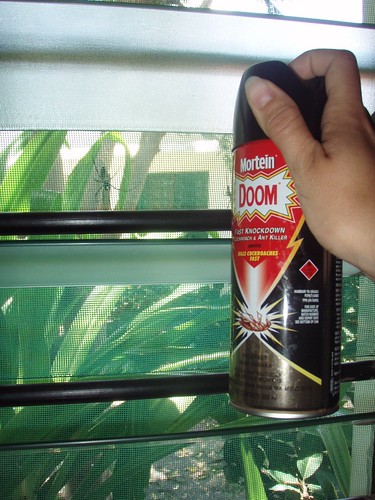
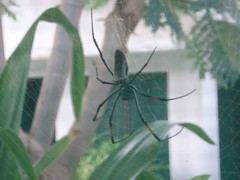
It's about midnight in Kenya and I want to go to bed. I don't have arachnophobia or anything, but there's a spider the size of Godzilla (I'm only slightly exaggerating) outside the window next to the double bed where we’ll all be sleeping head-to-toe.

I mean, going on a honeymoon with my girlfriends is a blast and all, except they don’t care if you whine about bugs. And they definitely won’t kill it for you. So nobody wants to crash on the side closest to the spider (pictured). I call not it!

We leave the vote up to you: Who gets the side farthest away from the bug? Please vote for me!
Holly

Tuesday, October 17, 2006

Finding Common Ground

voADP: As Jen has already admitted on in this blog, volunteering in Kenya has been her lifelong dream. When she suggested it to us at the outset of our round-the-world trip, Holly and I smiled, laughed, agreed…then secretly admitted our fear that we wouldn’t be able to hack the selfless service in a part of the world known for its malarial mosquitoes and other gargantuan insects (called “doo-doos, by the locals). While I love sharing my bed with handsome two-legged creatures, I wasn’t sure if I could hack the eight-legged ones. Plus, Peru’s lack of toilet paper was already disconcerting—would I be able to stomach the contaminated water supply and hole-in-the-ground toilets?
Even as these thoughts crossed my mind, I tried to stamp them out, rebuking myself for becoming too prissy and spoiled during my six year residency in Manhattan. If I could handle rats in the subway, couldn’t I manage to co-exist with the bugs of Western Kenya?

Motivated by these thoughts and Jen’s unbridled enthusiasm for all things “Flame Tree” (see previous blog entries for explanation), the girls and I signed up for a four week program with Village Volunteers, a Seattle-based outfit that we liked because it devoted the greatest percentage of the weekly fee to the local Kenyan people. We arranged to spend the largest chunk of our time working at Pathfinder Academy, a school and farm just outside the town of Kiminini in the far western part of Kenya.

We heard that the ride there would be bumpy and take about eight hours. Over 10 hours later, we disembarked, knocked-kneed, feeling like we’d just gone a few rounds with Mike Tyson before his evening feeding.

I’d half expected the program to take place in the middle of the African savannah, with giraffes and zebras stampeding past our modest huts, the only manmade objects in an enormous valley of all-natural, sepia-toned Out of Africa splendor. While I did spot a couple of zebra on the bus ride over, I learned that the “big five” wildlife that I’d hoped to see sticks mainly to a region near the Tanzania border called the Masai Mara and on game reserves throughout Kenya. Where we landed was nestled squarely within farm country, where one is far more likely to witness cows, pigs, ducks, chickens, dogs, cats and the odd rooster (which is disturbingly called a “cock” here) roam past their door than a gazelle or elephant.

Though our program with Village Volunteers, Holly, Jen and I started working with 14 pre-teen girls who sleep and attend school at Pathfinder Academy. These young women board at the school because it’s just too far and too dangerous for them to walk endless miles to classes alone. At least four have been the victims of rape or attempted sexual violence as they’ve traveled miles over desolate country roads, so their principal (and our program director) Joshua built an on-site dorm about a year ago to create a safe space for them to live and learn without the fear of another attack. Three huts have also been built to house volunteers.

At the camp, the girls and I joined Yale student and fellow volunteer Irene Scher in acting as teacher, counselor and friend to these amazing little women. Despite their difficult circumstances (almost every girl has lost one or both parents due to malaria, HIV or insufficient medical care), they are all excited to learn. We’ve been working with them to write, cast and launch a play about Wangari Maathai, the first women in Africa to win the Nobel Peace Prize for her tree planting efforts throughout Kenya.

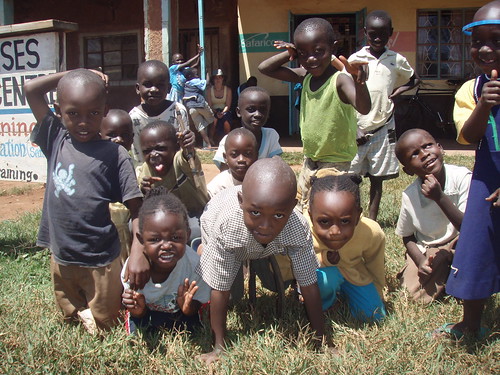
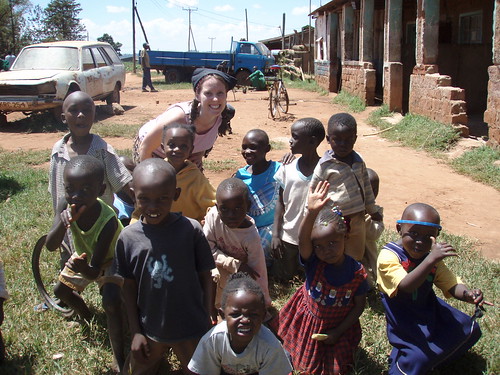
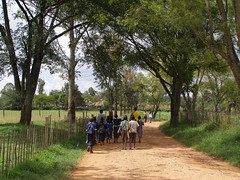
Besides the 200 or so students who attend Pathfinder Academy, there are countless other kids who live, play and go to school in this area. It’s impossible to walk 10 feet down the rusty red dirt road without encountering pockets of little ones in smartly matched school uniforms, secondhand Sunday school dresses or raggedy hand-me-down sweaters three sizes too big. Pint-size ambassadors of Kenyan goodwill and diplomacy, some kids will struggle to the front of the pack to shake our hands, then run away to giggle with their friends, acting like they’ve just had a close encounter with a glowing white alien. It’s a scene that repeats itself almost every time we go for a walk or head to the local village to pick up bottled water, candy and, on one occasion a jumbo sized can of Doom bug spray.

I’m telling you, the kids out here are cute, but the insects in Kenya are killer.

Wednesday, October 11, 2006

Six Degrees of the LGs

ADP: As we've traveled, my fellow Lost Girls and I have found that its infinitely more interesting to learn about the hidden corners of a new city from the people who know it best (the locals!) rather than some stuffy guidebook. We're hoping that you, our fabulous readers, might have a few compadres in the countries that we'll be visiting around the globe. If you've got a best friend, ex-boyfriend, sister-in-law, old college roommate, former coworker or chat room buddy who lives in one of the countries below, would you be a total sweetheart and put us in touch? We promise, once we arrive in the local area, we'll take your pal out for a beer--and hoist a pint in your honor.

The LG Updated Itinerary


Nov 1 - Nov 7: Dubai, United Arab Emirates

Nov 8 - Dec 1: Southern India, including Banglore, Goa and Kerala

Dec 1 - March 1: Southeast Asia, including Thailand, Cambodia, Laos, Vietnam, Myanmar

March 1 - 15: Bali, Indonesia

March 15 - April 11: New Zealand

April 11 - June 30th: Australia

Tuesday, October 10, 2006

A Kenyan Wake-Up Call

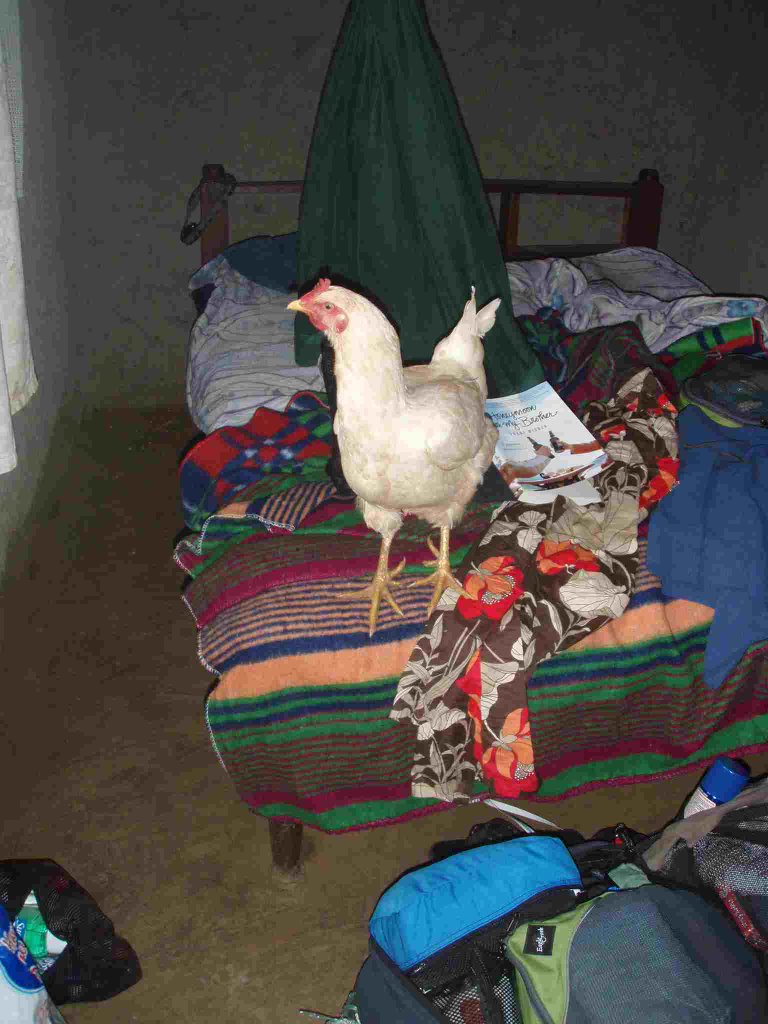
When I opened my eyes at daybreak this morning, a humongous, beady-eyed white monster was standing on my chest, staring back at me.

“Ahhh!!!” I screamed, hurtling my covers across the room.

“Bah-GAWK!!” shrieked the monster as it scurried away in a tornado of feathers.

“Oh my god, there’s a chicken in our bed!” I said, now fully awake, but completely confused.

Next to me Holly groaned and rolled over. Later she’d tell me that I’d kept her up all night sleep-talking, and she was convinced that this was just another of my wacko dreams.

The chicken squeezed its way out of the pine planked door to our room, only to return again a few seconds later to make another attempt at roosting on our bed.

“Scram!” I yelled in its face, now pissed that I’d been woken up at a quarter after six by a barnyard animal. The big white bird freaked out again, flapping its meaty wings spastically before making another u-turn out of our room. I kicked a large jug of water in front of the door to make sure it stayed closed, then fell back down again on the tiny bed.

Wow. Back home, roosters may act like substitute alarm clocks, but here in Kenya, the poultry actually comes inside your room to make sure the job is done.

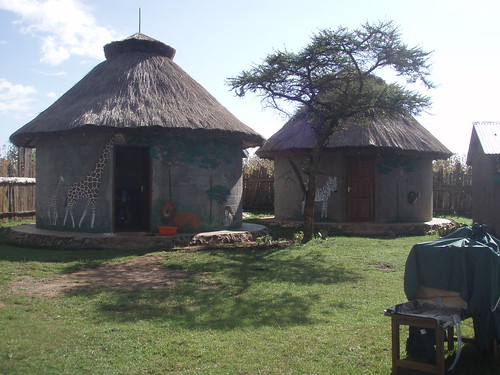
It was our first morning at Common Ground, the volunteer program that the girls and I had signed up for in the small rural village of Kiminini (an eight hour bus ride from Nairobi). The small compound where we’d be working with young girls contained a school for 200 children, some farmland, a medical clinic and a few huts for volunteers. Ours, however, hadn’t been completed by the time we arrived, so Holly and I had been placed in a spare room flanking the program director Joshua’s small concrete house.

That room, according to our fellow volunteer Irene, is the exact spot where one of the chickens likes to lay an egg every single day.

“The family doesn’t mind it. In fact, they’d probably be upset if the chicken couldn’t get in there to do its business. So don’t lock it out.”

“But it’s taking our blankets and clothes and making a nest out them,” moaned Holly, who by now understood that the chicken wasn’t just another of my midnight hallucinations. “Why doesn’t it just stay outside?”

“Well it’s a pretty smart chicken. She’s figured out how to open up the bedroom door and close it again behind her. It’s almost like she wants privacy.” Irene responded.

“No way! Just like a Jurassic Park velocaraptor!” added Jen helpfully.

None of us could believe it, but during lunch that day, as if we’d arrived right on time to watch her show, the diva bird (which we eventually named Mariah) entered the front door to the house, shoved the bedroom door open with her beak and slipped inside. We can only assume that she hopped up on our bed to get cozy; we don’t know because she shoved the door closed behind her.

Without any real plan to prevent my bed from being turned into a hatchery, I cracked the door open and started to approach the bed. A flurry of angry feathers and squawks made the chicken’s intention pointedly clear: did I really want to lose a finger over a good night’s sleep?

I decided to back away and let nature take its course. Ten minutes later, a fresh new egg appeared and the chicken bolted out the door.

Over the course of the day, the chicken returned to our room two more times and delivered one more warm surprise on our sheets.

I never knew that chickens could lay multiple eggs on one day, or that they preferred human furnishings to their otherwise comfortable coops, but one thing was definitely for sure.

I had the answer to the age of old question of which came first….

The chicken, of course.

Tuesday, October 3, 2006

A Flame Tree Dream Fulfilled

When the girls and I first began to discuss the itinerary for our year around the world, there were certain locations that each of us just had to visit and specific goals we felt compelled to achieve. For Amanda, it was perfecting her Spanish in Peru; for Holly it was earning her Yoga teaching certificate in Southern India; and for me, it was working as a volunteer in Kenya, Africa. To some that may seem like kind of a random desire, but anyone who’s known me since childhood, or for more than 2 seconds, can tell you why this has been my dream since I was still carrying a lunch box to school. For those of you who don’t know me, I can sum it up in four words - - Flame Trees of Thika. If I’ve lost you at this point, let me take you back to the mid 80s when it all started…

Unlike most of my friends’ parents, mine had this crazy notion that cable television was an unnecessary luxury that I could absolutely live without. As you can imagine, I thought this was the worst idea ever and vehemently protested my opposition. But despite my constant begging and pleading to be “like all my friends”, my Nickelodeon-painted fantasies would sadly never come to fruition. So I became the only kid in my neighborhood with in-depth knowledge of the Saturday night Masterpiece Theatre schedule. While my contemporaries enthusiastically recounted the latest episodes of Double Dare, You Can’t Do That On Television or Finders Keepers, I wisely kept my assessment of BBC staples like Poirot, Mystery and Upstairs Downstairs to myself. I mean, I could be black listed from the playground for such an egregious offense against the kid code of conduct. My mourning over a cable-less household was soon quelled when my parents called me in to the TV room one night to watch a new mini-series with them – one that would stay with me for years to come. At first, I was skeptical. I could barely pronounce the title, Flame Trees of Thika, let alone be excited about it. That all changed after the first scene when I realized that a little girl my age was one of the main characters. Score one for Mom and Dad - finally!

The 8-part series soon became the thing I looked most forward to each week – aside from the ice cream man, later bed times and extended school recess, that is. Based on the true story of Elspeth Huxley, a young girl whose parents moved her from England in 1913 to start a coffee farm in Kenya, Flame Trees of Thika was my first encounter with life in East Africa. I was instantly intrigued by the mysterious culture of the indigenous people, the magnitude of exotic animals roaming freely in the plains and the breathtaking natural beauty of the land. I longed to mingle among the native Kikuyu tribe, explore the vast expanses of wheat-colored savannah and have my very own white pony – just like Elspeth. For the time being, though, I was happy to live vicariously through my newfound heroine. Until, of course, the sad day arrived when the series came to an end. Sobbing uncontrollably to the rhythm of the credits, I was consoled only by my Mom’s insistence that I would be reunited with Flame Trees of Thika again soon (thank God for re-runs). And she was right. But no matter how many hours I logged re-watching my coveted VHS copy of the series in years to come, it never replaced my desire to see Africa for myself. And after almost two decades of planning the pilgrimage in my head, I’ve finally made it to the Kenya I’ve been dreaming about for so long.

Of course, having set such high expectations for this part of the trip, I felt a sudden wave of nervousness come over me as our plane rapidly approached the Jomo Kenyatta International airport in Nairobi (which, as a side note, isn’t nearly as scary of a city as it’s reputed to be). What if the country is nothing like I imagined? What if we have an awful time here and my idyllic vision of Kenya is destroyed forever? Luckily, I would soon discover I had absolutely nothing to worry about. The first time I saw the distinctive, sun drenched acacia trees dotting the landscape (you've all seen them in movies; they look like huge bonsai trees sculpted into delicate, wispy umbrellas), witnessed a herd of zebras running down the henna-hued mud roads and encountered groups of beautiful, bright-eyed children shyly approaching to shake hands, I knew that my Kenyan experience would be nothing short of what I’d always imagined.

That’s the best thing about traveling. You can become the TV characters you loved as a kid, write a happy ending to your storybook fantasies and find yourself in the strange, exotic lands only seen before in the movies.

Or in my case, a PBS mini-series.

---Jen