Monday, September 29, 2008

Lost Couple of the Week: Monna and Damien

The old adage "out of sight, out of mind" might ring true for some friends, but not teachers Monna McDiarmid and Damien Pitter. These two Canadians realized that while thousands of miles might have separated them, their common love of travel could actually unite them in the end. Here, one half of the Lost Couple of the Week shares how she and her guy fell for the nomadic life in Columbia and Mexico...before falling for one another.


For the Love of Travel

—Monna McDiarmid

I had just finished my Bachelor of Education when a small private school in Columbia hired me—over the phone—to teach English Literature. It was a classic teacher meets world story; I needed a job and I wanted to travel. I had never imagined a place like Cali, Colombia. There, the temperature hovered at 32 degrees C (89 degrees F), always. The palm trees reached the stars. Even the five year olds danced better than I did.

On the high road to Tierra Dentro—where other buses had gone over the cliff—I got frostbite where my earrings were. On a chiva bus I sat beside a man holding a chicken. Cali was surreal like Gabriel Garcia Marquez novels. I didn’t know how lost I would need to get before learning that my Canadian way of seeing and doing things was not the only way. Cali was a fantastic education for an educator.

Back in Canada, I pursued graduate work and met Damien who was learning to make films. We became friends.

Then we both got lost, but separately: Damien grew up with some privilege in a loving Canadian home. A path laid out for him, with all the tools to get there. There was work involved, but it wasn’t going to be a hard life. Except that he didn’t know if he believed in the place it was all leading to. So Damien got lost. He taught in Pereira, Colombia, a land of contrasts. Green rainforests beside towers of landfill, a woman with her burlap bag, praying on the church step, feeling too dirty to enter. He recalls, "It was an experience of contrasts too, negotiating that first cultural clash, but I’ve never enjoyed everyday life more."

Damien and I found each other again, in Mexico. When Damien went to Colombia, I moved to Monterrey, Mexico, where I taught English and became a High School Counselor. After three years, Damien joined me Monterrey and we got lost together. We followed Neruda to Chile and drove across the story of America, from Monterrey to Ottawa and back. We still miss Mexico, still dream about Oaxacan mole, the falling-down beauty of Real de Catorce, Zihuatenejo’s simplicity, and open fields of Joshua trees.

Currently, we work at a small international school in Barcelona, Spain. I love Europe and the way Europeans live. Fruit and vegetable markets. Pastry shops. The hard-won love of local merchants in Catalunya.

Most of the time we lead pretty regular teaching lives but we’ve used our long weekends and holidays to continue losing, and finding, ourselves. We’ve loved the food in Florence, the buskers in Dublin, our train companion in Budapest, the Paris in Paris, and the history, holy history, of Rome. We’ve learned some things about power and privilege, about kindness and simplicity, about risk and safety, about magic and faith, about food and love and our love for food. We’ve learned a little history and a lot about beauty. We teach and write and take photographs; I blog at Teacher Meets World, and we share a little photo blog, 14 Lenses, with some of our former colleagues and students who have dispersed around the world.

In all of our travels, perhaps we’ve loved this best: Valparaiso, Chile is a brokedown palace of color that huddles up on its hill-haunches as though the Pacific were a bonfire. On Christmas Eve, the streets were empty, the windows unshuttered. Walking through the hills, we caught glimpses of extended family dinners and decorated warmth. Bells sounded midnight and children flooded the streets, each with a new toy, a bicycle, a ball, and with joy… simple and palpable as whipped cream on hot chocolate.

—Monna writes about daily life in her adopted city of Barcelona at Teacher Meets World. Her past homes include Colombia and Mexico. She say that her Spanish "ought to be much better than it is."


Sunday, September 28, 2008

Vote Now!! Saving the Lives of Malnourished Children

Jen: Since returning from our trip around the world, The Lost Girls have pledged to support non-profit projects and philanthropic organizations we believe are making a positive impact in the lives of those in need. So when we found out that the International Medical Corp was eligible to receive up to $1.5 million to support their "Saving the Lives of Malnourished Children" project, we felt compelled to spread the word. Funds will only be awarded to those groups ranked in the Top 5 American Express Members Projects, so every vote counts!

For more information and to cast your vote before tomorrow's (September 29th) deadline, please log on to: http://www.membersproject.com/project/view/OZH1P1

Thursday, September 25, 2008

Dispatch from the Weinermobile: Outrunning the Hurricanes

ADP: Well, pass the relish and say "Hot Dog!" Today we are psyched to announce that Oscar Meyer Weinermobile girls and fellow LGs Molly Fergus and Selena Armendarez will be blogging regularly on Lost Girls World. They'll be sharing tales of their about their on-the-road adventures in the US every few weeks. Their inaugural post details how their got their um, buns, out of the path of the Hurricanes Gustav and Ike last month. To get the "frank" details about their assignment inside the country's most recognizable vehicle, click here.

*****

Outrunning the Hurricanes

by Molly Fergus and Selena Armendarez

“Bread! Isn’t that what you get during a hurricane?” I asked Selena as I grabbed a wheat loaf from the picked-over Wal-Mart shelves. I threw the bread in the cart next to a case of Diet Coke, a box of Zebra Cakes, and a packet of tuna.

“I think chocolate is more important,” she answered and reached for a box of chocolate-covered graham crackers -- the kind that taste really good smothered in peanut butter.

We were stocking our Wienermobile for what might be one of the ultimate travel adventures: evacuating from a natural disaster. Based in Lafayette, LA for a week, we had immersed ourselves in Cajun culture – and by immerse, we mean chowing on crawfish, dancing Cajun two-steps, and spotting alligators during swamp tours.

Then Hurricane Gustav swirled into the Gulf of Mexico over Labor Day weekend, and our eating/dancing/swamping tours were halted. The first major hurricane to target Louisiana’s coast since Katrina and Rita in 2005, Gustav threatened to become a Category 5 storm – meaning winds would have topped 155 m.p.h.

And there we were in the middle of evacuation procedures. With a Wienermobile.

So we stockpiled on chocolate and caffeine and hit the road at 4 a.m. In July, we stayed in Corpus Christi, TX during Dolly, a Category 1 storm that beat up Texas’ South Padre Island. This time, we feared gridlocked evacuation traffic and empty gas stations as the entire Louisiana coastline headed north.

What we didn’t expect: that stressed out, anxious evacuees would forget their troubles long enough to smile, honk and wave at the giant hot dog zipping down the expressway.

We traveled for six hours before we landed in Fairfield, TX, a small town between Houston and Dallas, where a Holiday Inn-full of evacuees greeted us.

Fortunately, Gustav mellowed before striking Louisiana and came onshore as a Category 2 storm. The winds and storm surge still damaged parts of the coast but spared the state from the anticipated devastation.

Since Gustav, we’ve evacuated a third hurricane; Ike hit the Texas and western Louisiana coastlines while we were hotdogging around Houston. We left the storm to hide out in San Antonio, where we brought the Wienermobile to a shelter for a few hours and donated toys to the Salvation Army’s relief efforts.

In both situations, we were thrilled to give evacuees a temporary distraction. It reminded us that even though we embarked on his yearlong road trip to see the country and skip the 9-to-5, traveling is not an entirely selfish endeavor. Travel changes us Lost Girls, but we also impact the world – whether we drive giant hot dogs or volunteer in Kenya.


Tuesday, September 23, 2008

Tasting Table: NYC grub one bite at a time


ADP: Anybody hungry? I am—its only 3:18 pm and I'm still 42 minutes away from my regularly scheduled snacktime!

But the real reason my stomach is growling is because a friend just tipped me off to a yummy new website called TastingTable.com. It's a free daily subscription service that works kind of like Daily Candy for foodies. Sign up, and you'll get one email per weekday designed to keep you in the know about New York City dining, wine, cocktails, cooking and restaurant personalities. Even if you're not based in the Big Apple, I'd sign up before planning a visit here. You'll learn about cool new dishes and insider-y spots even before most locals do...and you can astound your travel companions with your ability to take them somewhere not overrun by, um, tacky tourists (not you, of course...)

Thursday, September 18, 2008

Rolf Potts On Travel Writing

Our previous entry highlighted Rolf Potts’ sophomore book that weaves his personal tales of adventures on the road with commentary on the art of storytelling. In travel, we seek to discover our humanity, our connection to other people, and our place in relation to it all. And the act of writing is a way of experiencing it all over again, and trying to make sense of the journey. We challenge you to read Marco Polo Didn’t Go There: Stories and Revelations From One Decade As a Travel Writer and not want to grab a notebook or laptop and start recording the world around you—wherever you may be on your own journey. Today, we’re honored to have Mr. Potts visit our site as part of his virtual book tour (he may even be coming to a town near you). Here, he shares lessons learned from a decade of interviewing top travel writers at RolfPotts.com.

From the author:
"Way back in 1999, when I was first cutting my teeth as a travel columnist for Salon.com, lots of readers wrote in to ask me how they, too, could get jobs as travel writers. This question kind of caught me off guard, since I didn't know much about the travel-writing trade; I only knew my own experiences with it.

Thus, in order to better assist people (and myself) in understanding what it's like to be a travel writer, I began posing a list of 10 basic questions to various travel-writing colleagues. I started with Lonely Planet writer Joe Cummings in November of 2000, and I've since gone on to interview nearly 100 folks from all corners of the travel-writing milieu, including Tony Wheeler, Holly Morris, Rick Steves, Simon Winchester, Tony Horwitz, Sarah Erdman, and Arthur Frommer.

Having culled some choice quotes from those interviews over the years, here are seven key lessons my colleagues have shared:


1) START IN YOUR BACK YARD

"Why wait? If you don't have the funds to take off for, say, Chiang Mai, why not write about a neighborhood in your own town or city? Or a creek? Or the people who fish in that creek? Or are trying to save that creek? Subjects are nearby, and infinite."
--C.M. Mayo, Author of Miraculous Air and other books

"Anybody who is a talented travel writer will be discovered, and has more than adequate outlets for his writing. If a person wants to write about travel, they should immediately sit down and write about aspects of their own community. They can do a story on Cincinnati or Milwaukee — or wherever they live. If it is good, it will be published. It will be seen, and you will build up enough of a dossier of published articles to obtain a job as a travel writer for magazines or for book publishers."
--Arthur Frommer, travel guidebook pioneer

"The craft of writing is similar to dancing. If you want to get good fast, learn slowly. And practice. If you don't master the basics of storytelling and writing in the beginning you will suffer by making the same mistakes over and over again."
--Eric Hansen, author of Stranger in the Forest and other books


2) WRITE ABOUT THE THINGS YOU CARE ABOUT

"Travel writers should find the places and stories they have a real emotional connection with; otherwise, the journey will flag, and readers won't care. You have to find the stories that only you can tell, or that no one else has thought to tell."
--Tom Bissell, author of Chasing the Sea and other books

"If I have any advice at all, it is to only write what you are deeply interested in, and to enjoy everything you do. Strive to have an interesting life. I have so many friends whose agents from time to time get them big solid book deals for projects they are less than enthusiastic about, and most of them are resounding flops."
--Tahir Shah, author of The Caliph's House and other books

"Try to think what you in particular have to add or contribute. A million people go every month, no doubt, to the Taj Mahal, and many of them write eloquently about it. What is it that is particular to your interests and experiences that can allow you to say something new? Find a particular angle that arises out of one of your strengths and advantages, and try to make the focus of your piece as narrow and specific as possible. Don't try to summarize all of Japan after a two-week trip; pick one small corner of it, or one theme."
--Pico Iyer, author of Video Night in Kathmandu and other books


3) RESEARCH, BUT DON'T OVER-RESEARCH

"Before going [to a place], learn a lot, but not too much. Have ideas, but not a plan. Essentially, aim for an informed ignorance, so that you can know the contexts beforehand, then let the place define itself."
--Tom Haines, Boston Globe travel writer

"The biggest challenge in the research process is to let go, to stop, to say enough, and then to reduce all of that beloved labor down to a few succinct paragraphs that shape the background to your narrative. I love research — that's all the fun, especially in the field. To write, however, is to suffer, and my pieces usually come in thousands of words over the assigned length. That's a serious flaw in my writing process — shaping and disciplining the footlockers of material one has so happily gathered."
--Bob Shacochis, author of Swimming in the Volcano and other books


4) THIS LIFESTYLE WILL REQUIRE SACRIFICES

"Learn to love living in basements and eating ramen noodles. You must be utterly obsessed with it — more than you want a new car, a house, a family, a dog, houseplants — because you are competing with those of us who are willing to give up all those things in order to write."
--Karin Muller, author of Japanland and other books

"The reason this works for me is that I don’t want anything. I don't want much stuff. So far it's been easy to get up and leave and go someplace else because I don't own anything that I have to haul behind me. Nothing that I'm physically or emotionally attached to. So my advice is to learn how to make do on as little money as possible, because sometimes there's just not a lot of money coming. …If you really want to write, and write only, as opposed to writing while you're waiting tables or writing while you're teaching somewhere, just have to cut your expenses and cut your needs and wants."
--Eddy L. Harris, author of Mississippi Solo and other books


5) IT'S ABOUT HOW YOU TRAVEL

"Go into travel before you go into travel writing. You should know how to cross a land border, book plane tickets in a language you don't speak and befriend the old lady who squints evilly from the second-story window at everyone who passes by. In other words, if you're just after paid vacations, then you're going to have a tough time. But if you're willing to put aside your ego, embrace the unknown and endure crushing poverty, then you might have a shot."
--Matt Gross, New York Times travel writer

"Don't just travel; live in another country for awhile -- preferably a non-English speaking one."
--Thomas Swick, author of A Way to See the World and other books


6) IT'S ABOUT SITTING DOWN AND DOING THE WORK

"Avoid being swept up into the romance of the idea; just because travel is exotic doesn't mean the writing profession is any less routine than a 9 to 5 desk job. Tenacity counts for more than any single personal attribute. If you are going to make it, it will only be via your unflagging, inexhaustible, indestructible ability to persevere."
--Jennifer Eaton Gokmen, co-editor of Tales from the Expat Harem

"You either write or you don’t. My advice to people who aspire to be me is to stop whining and just do it. Everything falls into place once you begin the process. If it doesn't, there is always Wal Mart. Just write and use it as your passport to learning about the world."
--Robert Young Pelton, author of The World's Most Dangerous Places and other books


7) IN THE END, IT'S ABOUT THE WRITING

"The beauty of this business is there is no barrier to entry. You can have a degree in journalism from Columbia and editors won't give a damn. You can be fresh out of the local community college and if you can write well, you'll get your stories published. This is the ultimate meritocracy: If you're good, you get work."
--Amanda Jones, freelance travel writer and photographer

"Editors, for the most part, don't care "what" you've done, or how astounding the physical event may have been. You need to write well. Many others are capable of doing what you have done, so you must write better than they."
--Tim Cahill, author of Road Fever and other books

"Editors are looking for writers who dabble in travel rather than travelers who dabble in writing. Plop Pico Iyer down at a Stuckey's on the Jersey Turnpike and I guarantee he'll come back with a great story. On the other hand, a dozen men have walked on the moon and not one has written anything worth reading about it. Strive to be a writer, not a travel writer."
--John Flinn, San Francisco Chronicle travel editor

You can follow the rest of Rolf Potts' virtual book tour online, or see him in person at one of 20 cities nationwide as he celebrates the release of Marco Polo Didn't Go There (Travelers' Tales, 2008). We encourage you to ask for the book at your favorite local bookstore or Amazon.com, and follow Rolf's tour diary at Gadling starting Sept 29th. Monday's virtual book tour stop will be at Matador Pulse. To read yesterday's tour stop, go to Vagabondish.

Turn To Rolf Potts For Travel Inspiration

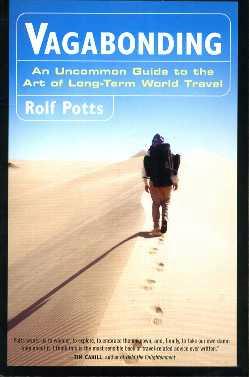
As travel writer Rolf Potts’ says in Vagabonding: An Uncommon Guide to the Art of Long-Term World Travel, “If travel truly is in the journey and not the destination, if travel really is an attitude of awareness and openness to new things, then any moment can be considered travel.” He encourages us to be creative, seek out adventures, and “live your life in such a way that allows your dreams room to breathe.”

Where his first book delivered a practical and philosophical guide to travel (and, might we add, life in general), his second, Marco Polo Didn’t Go There: Stories and Revelations From One Decade as a Postmodern Travel Writer, offers a glimpse into the essence of travel writing itself.

Rather than being a straight up how-to manual, Potts’ tome is a veritable guide to fully embracing the highs and lows of life on the road, as well as the creative process. It features a collection of essays penned over Potts’ decade of voyages across five continents, complete with a “bonus track” following each that reveals insider information as to how these tales came about—and what things were left out for the sake of good storytelling.

Here are a few cool insights we liked from Potts’ latest read:
• Seeking an “authentic” travel experience by attempting to break out of the “backpackers’ circuit” in Vietnam (after which he instead discovers “Sometimes, the Circuit is not a physical route, but a largely unavoidable state of mind that regulates your expectations”).
• Trying to put together the series of events that culminated with him drugged and robbed in Istanbul (to which he concludes, “You come out, in the end, with a sense of wonder at all those other, unseen moments when the threads of chance fluttered—nearly connecting, but not—just past the periphery of your life”).
• Attempting to crash the movie set of The Beach, starring Leonardo DiCaprio, on a Thai island (even if it wasn’t a mission accomplished, he’ll tell you in the end “…that I walked through the Valley of the Shadow of Death, and that I feared no evil—for the Valley of the Shadow of Death will soon feature guided tours and a snack bar”).

Potts’ willingness to share the motivation behind his own wanderings—and provide nuts and bolts info on how he crafted his compelling narratives—will help readers make better sense of how to translate their own experiences onto the page. But you don’t have to read the commentary track at all to absorb the book’s real message: Travel, and life, is a delicate balance of creating your own adventures, yet being open to unplanned detours.

Sunday, September 14, 2008

Summer In The City

HCC: My fellow Lost Girls and I have been busy plugging away at writing the book all summer long, so we haven’t been getting out as much as we used to. Heck, after a few days spent cuddled up with my computer, I consider just going to an evening yoga class a big night out. And while it tends to be naturally quieter this time of year with many New Yorkers migrating to less humid locales, such as the Hamptons, there’s still plenty of writing distractions happening in the city that never sleeps. Here are three urban experiences for when you can’t get to the beach during the dog days.

Have fun for a cause. My friend Meg and I discovered a whole new singles scene that exists outside the traditional pub-filled stomping grounds: charity events. It may sound strange, but there seems to be a huge community of singles who prefer to spend their entertainment dollars on worthy causes than to burn through their wallets on over-priced martinis at a fancy bar. You can log onto sites such as charitybenefits.com or charityhappenings.org to find events that interest you and causes that you care about. Meg and I attended the Ultimate Summertime Party at Central Park’s outdoor amusement park at Wollman Rink, put on by the National Multiple Sclerosis Society. The $75 we paid for a ticket went to help fund education and research for the disease, and we got to act like kids again by playing carnival games, eating fried food, and jumping on rides (how dare I go down a slide in a skirt?!).

Take me out to the ball game. I’ve committed the ultimate crime in the eyes of many baseball fans: I’ve lived in New York for more than six years and had never been to a Yankees game. Since this was the final season to see our team play in the old stadium before they christen the new one, my friend Matt somehow hooked us up with tickets to watch the Yankees play the LA Angels. Though I know next to nothing about baseball, I couldn’t help but cheer along with the crowd as the bleachers shook and vibrated from fans stomping their feet. But I suspect Matty may have regretted his decision to bring me along when die-hard Yankees fans dressed head-to-toe in attire decorated with their team’s logo threw me menacing looks after I stood up to yell wildly when the teams switched places on the field. “Hol, you’re cheering from the wrong team,” he’d leaned over and whispered in my ear, no doubt a little nervous that the group of inebriated men seated behind us might retaliate. We both came out okay, but our team didn’t: The Yankees lost 0 to 1.

Sip and sail. Sailing past the Statue of Liberty at sunset is a welcome relief from the steamy heat rising off the smoldering concrete—well, as long as you don’t get seasick! For Amanda’s fabulous 30th birthday celebration (which actually lasted an entire month with the myriad of dinners, lunches, and parties we had planned for the youngest Lost Girl), we embarked on a 40-person sailboat around the tip of the island we call home. More upscale than the popular booze cruises, we nibbled on foccacio and tasted various Italian wines as the crew did all the heavy lifting. And nary a one of us got seasick—though we might have felt a little queasy from overdosing on the birthday cupcakes we smuggled onboard.

Tuesday, September 9, 2008

LG Obession: Idlewild

ADP: I didn't think it was possible to love bookstores even more than I already do (the scent of freshly printed paperbacks mixed with coffee grounds practically makes me high) until the random Thursday morning I stumbled upon Idlewild in New York City.

I'd been granted a full day off work, and I must have been in quite a mood, as I was actually gazing upwards at the buildings instead of down at my feet in a typical gotta-get-there beeline. On the second floor of a nondescript building in the Flatiron district, I spotted what appeared to be a new specialty bookstore travelers.

I couldn't believe it. In a city where many of the cool mom and pop bookshops have bowed out to the big Barnes and Noble-type superstores (You've Got Mail wasn't entirely a fictional tale), some maverick had opened up a shop designed exclusively for travel and literature junkies. Who would be so reckless?

Apparently, that man would be David Del Vecchio. A former United Nations press officer with a penchant for all things travel, Del Vecchio got his passion project up and running just a few months ago. He named the shop Idlewild as a nod to the original name for New York International Airport, which was renamed JFK in December 1963.

There's oh so much to love about this shop, which is located on the parlor floor of an 1880s-era home. Charming to the hilt, the 1,000 square foot space contains stained glass and chairs from the original Idlewild Airport. It's filled with globes and maps and of course, row after row of travel guidebooks, cookbooks, memoirs and children's books, all grouped geographically. The shop also carries travel accessories, including international power adapters, disposable cameras, carry-on bags, luggage tags, and, of course, itty bitty book lights for long-haul flights.

Check out the website to learn about upcoming book launches and signings--according to The New York Sun, Del Vecchio's goal is to develop a set of regulars (which he already sees forming) and to create a sense of community. Since opening, he has hosted a number of discussions and signings, including the American book launch and reception for "A Town Like Paris" by Bryce Corbett.

Monday, September 8, 2008

Speaking Franglish: the tale of modern day pen-pals

What could happen if two women, who have never met, on two different continents, in two different cities, at two different places in their lives wrote letters to each other, back and forth, for a year? That what Glamour health blogger Sarah Jio and her friend-from-a-distance Valentina Russo asked themselves as they launched their charming new blog Speaking Franglish. Their goal: "to see we could learn about friendship, life, and ourselves by slowing down and writing letters."


Sarah, a freelance writer and author, lives in Seattle and has published stories across ton of glossy lifestyle and women's mags (including Gourmet, Health, Glamour, Marie Claire, SELF, O, The Oprah Magazine, and Cooking Light). Valentina lives in Marseille, France and is fluent in five languages: Italian, English, French, Spanish, and Portuguese. She started her career in Paris at Italian Vogue and Studio G, a photographer's PR agency.

The two connected after Sarah (who felt a bit stalkerish) found Valentina's MySpace page and sent her a note.

"I didn't expect her to respond, but she did!" recalls Sarah. "We've never met or talked on the phone. We know nothing more about each other than what we're reading from our letters and a few emails we exchanged before we began the project."

On their blog, Sarah and Valentina share that they're hoping to learn from one another. They love getting mail and the idea of becoming modern day "blog pals." Their goal is to keep up the project for a year.

"I guess we felt that doing a blog would be a good excuse to come back to our desks, sit down, and write (which is actually kind of therapeutic given our crazy-busy lives). We also felt that others might be able to connect with our writing, too."

The Franglish bloggers have been keeping the notes flying (and sharing them with us) since this past April. Keep it up, ladies! We're loving your letters...

Marco Polo: Rolf Potts' New Book (and some info on ours)

At long last, ramblin' man and Vagabonding scribe Rolf Potts has announced the release of his long-awaited new book, Marco Polo Didn’t Go There. According to Potts, this sophomore title is "a look back at my boldest, funniest, and most revealing travel-writing adventures from the past 10 years."

In an effort to teach as well as entertain, Potts has included a “commentary track” — notes designed to show the reader how his stories were created and written (he wants this to be "travel-writing textbook," of sorts). Potts has offered to do several book club appearances, so the Lost Girls may well have to create one (stat!) in order to meet the man himself. Any New Yorkers want to join us??

We also want to thank Potts' and his team over at vagablogging.net for posting a very nice Q&A on their site about our upcoming book (see below). So far, so good on the writing process. Well, sorta kinda good. It's going a tad bit slower than expected (ack! blank page anxiety!!) but we're still working out how to blend three different takes on the same RTW adventure. If you thought sharing a hostel bathroom was tricky, try sharing the pages of your memoir!

Over the past few months, in an effort to determine the ideal writing locale, we've also been systematically trying out all of the "free wi-fi" hotspots in Manhattan and Brooklyn (not a distraction technique, we swear!). So far, the winners are the SoHo Grand (best hotel lobby), Cocoa Bar (best Lower East Side coffee shop) and Fresh Salt (best dive bar). Please send us your favorite spots and we'll post 'em here.

Below, the reprint of our Vagablogging interview...visit the site, leave (friendly) comments!

******

The Lost Girls Book and… Movie?

It’s official: The Lost Girls have a book deal! The Girls (Amanda Pressner, Jennifer Baggett and Holly Corbett) are currently hunkered down in New York City writing and perfecting their tome for the masses.

In 2006, the Girls left their jobs, families, boyfriends, and worldly possessions behind to travel the globe on a girls getaway for a year. Their magnificent blog won the 2007 Travvies Best Group-Written Travel Blog award. They have blogged on everything from how to quit your job to travel to tips on starting a travel blog to selecting the best travel bra to interviewing each other about life on the road. The Lost Girls can do it all.

In 2007, they came home and are started putting a book proposal together. HarperCollins bought the book, a movie deal soon followed, and now the Lost Girls are working hard to get everything ready.

They were kind enough to take a few minutes to answer a few questions.

What advice do you have for a traveler who wants to get a book published?

First and foremost, know that it is possible to get a book deal. Someone has to write this generation’s incarnation of On the Road or put a cool new spin on Eat, Pray, Love—why shouldn’t it be you? The thing to keep in mind, however, is that it can take even talented writers several years before they find an agent, and a publisher, willing to take them on. Some of the most famous novelists got doors slammed in their faces (or worse, heard nothing at all) countless times before they finally convinced someone to believe in their ideas, and their talent.

Before going for the big book enchilada, we’d strongly recommend honing your voice and narrative style as much as possible by, well—writing. Keep a journal and jot down notes and ideas everywhere you go. Sign up for your own a travel blog. Contribute pieces to other well-know travel sites like Vagablogging, World Hum, or Brave New Traveler (some will actually pay you to publish your work!) Pick up a copy of the Writer’s Market to find out which travel magazines and newspapers accept queries. Learn how to write an article query by snagging a few more books from Amazon.com on the topic (there are several guides out there to help you get started) or take a class through Mediabistro (locations in cities nationwide). The point is to gain both experience—and collect the clips—that will later show an agent and publisher that you have the chops to write an entire manuscript.

One interesting thing we learned when trying to shop around The Lost Girls: agents and editors have recently been flooded with book ideas from one writer who has visited a single destination. These ideas are often discarded, because they’re not viewed as compelling, or unique enough. Our editor at Harper Collins told us that the reason they liked The Lost Girls was that it presented a unique spin on a travel tale: Three best friends from New York City, who abandoned all of the things that 20-somethings are supposed to want (stable jobs, great guys, a positive bank balance) in order to travel around the world.

Was it difficult to find an agent/publisher?

Not as difficult as we’d anticipated! We were surprised to learn that editors and agents—who receive thousands of book queries every year—actually check out popular blogs to see if they could possibly be translated into print. The reason being, if a blogger has already gained a large following online, her book might also be a popular success.

A few agents and one editor at a major publishing house stumbled across our blog while we were still traveling, and wrote to express interest. Of course, no one actually wanted to meet with us until we’d composed a polished book proposal, so the three of us holed up for an entire month at Holly’s family’s house in Syracuse to put together our 60-page document together. The whole thing sort of felt like we were cramming for a huge test or writing a group term paper—but the process was so much more enjoyable because we had each other around to take the pressure off.

Another thing we learned—writing a proposal is a little like taking the LSATs or SATs. It seems hugely daunting before you sit down to do it, but if you read a few how-guides, figure out what the people reviewing your work are looking for, it’s actually not as scary as it might seem.

Finally—anybody can write a proposal. And it’s amazing how many people you’ll find to help if you just start asking around—talk to friends, write to authors you admire, attend writing workshops. Plus, there is a tremendous number of resources online. You can sign up for an online class at Mediabistro.com to learn exactly how to write a proposal with the help of a professional. Look for agents in places such as publishersmarketplace.com.

How many queries and proposals did you have to send in order to sell your story?

We met with about five agents before we found one who “got” our quirky personalities and understood The Lost Girls’ vision. Once we signed on with an agent, he pitched it around to 18 different publishers, casting a wide net to garnet as many responses as possible. We ended up meeting with six publishers, and finally signed on with one.

Your priority should be to find the right agent—a person who you could imagine working with for years—because he or she will do most of the legwork for you. The agent will guide you toward a publisher who understands your project and agrees on how you want to market the book. We went with HarperCollins because they shared our vision for writing The Lost Girls as a memoir. Other houses wanted us to turn TLG into a how-to tale or guidebook—a setup we didn’t feel as passionate about.

Along the way, we also learned that a winning book proposal has to have a really strong sample chapter. Initially, we’d created an extensive proposal, but decided on blog entries to serve as examples of our writing. Most publishers wouldn’t even look at the proposal until we went back and penned a really solid sample chapter so they could get a sense of our voice and how it might work as a full-length book. It was an important section, because it demonstrated that we could blend our voices in a way that isn’t shown on the blog.

Is it true that The Lost Girls may become a movie?

Yes! Almost as soon as our agent had sold the book rights to The Lost Girls, he worked with the agency’s Hollywood arm to sell the movie rights as well. We knew he might do this at some point, but had no idea that it could happen so quickly.

Warner Brothers optioned to buy the movie, which basically means they have rights to The Lost Girls idea for 18 months. At 18 months they decide whether they want to keep the rights and move forward with a screenplay and producing a movie, or they can give us back the rights and we can try to resell them to another studio.

We feel that the success of films like Sex and the City and Sisterhood of the Traveling Pants helped convince studios that movies about friendship (and lead by strong, likeable female characters) can do well at the box office.

Fingers crossed it’s a go!

Where do you find your “Lost Girl of the Week” for your blog?

They generally find us! We started that online feature to turn the spotlight on inspiring women we’d met on the road, or a reader with a compelling story about why she left to travel, and what she learned along the way. And since we know that women aren’t the only ones hitting the road to gain insight, we’ll occasionally feature the tale of a particularly cool Lost Guy.

We fully recognize that getting Lost isn’t a concept that applies just to us. There are young adventurers roaming every pocket of the globe and travelers who have left behind everything comforting and familiar in order to better understand themselves and the world at large. We love reading about their stories, and sharing as many of them possible on our blog—so write and let us know what you’re up to!

What are each of you up to now?

Despite our passion for full-time vagabonding, the three of us accepted desk jobs in order to restock our bank accounts (boring, but necessary!). Amanda is a nutrition editor at a health magazine, Jen does integrated marketing for an independent film/television channel, and Holly now taste-tests chocolates all day for a major candy manufacturer (well, that’s her dream job…she’s actually a freelance writer and editor for several national publications).

Recently, both Jen and Amanda approached their individual bosses about the possibility of going part time in order to focus more attention on book writing. And to their shock—both supervisors agreed to the arrangement! We’ve realized that if you put in the time and hard work to cultivate a successful career, your company/boss is generally more willing to allow time off to travel, or to rearrange your schedule to accommodate special project.

Now, all three of us spend our Fridays together at a coffee shop in Union Square, so we can make the task of book writing a collaborate process—and a fun one, at that.

Are you living in Manhattan?

Yes, Amanda and Jen both live in the Lower East Side, and Holly lives in Brooklyn.

Are you working on the book full-time or do you also have other jobs?

See question above. While we’ve received the first third of our advance (and split it by three!) we realized that we didn’t quite have enough left to quit our day jobs entirely.

Working a few days a week puts enough into our bank accounts to pay for rent and lots of caffeinated beverages while we’re writing the book.

Do you still crave a life on the road?
Absolutely. After living out of a backpack for a year, we found that we craved the stability and comforts of home. But now that we’ve been back in NYC for a while, all three of us find that we miss the freedom and ever-changing nature of life of the road.

Travel brought us rewards in the form of new friends, discoveries, and cultural experiences. It’s kind of fun never knowing where the day will take you, and we can’t wait until our next adventure.

Are there any trips in the works?

When we finished our year-long trip, we vowed to take a Lost Girls Getaway together once a year for the rest of lives. Since returning, we’ve planned a few weekend excursions together in the United States, and have traveled independently to Antarctica, Ecuador and the Bahamas. For the next six months, we’ll be staying close to home in order to write and promote the book. Once we finish the first draft of the memoir in January ’09, we’re planning to return to Argentina, the country that inspired our around-the-world adventure.